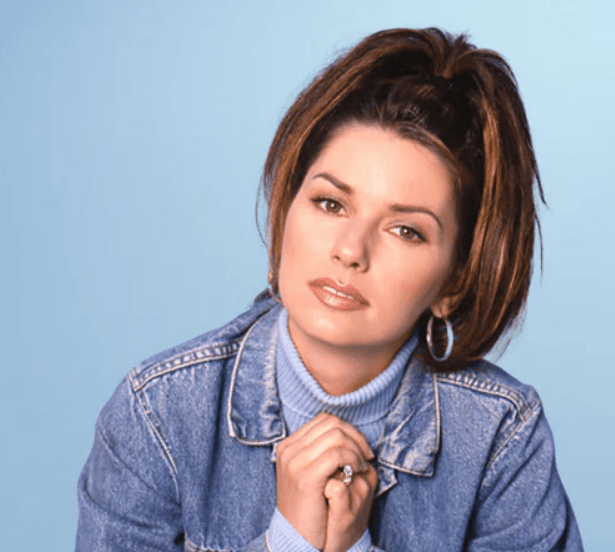
The Flops That Changed Everything: Three Country Legends Whose First Albums Bombed
By: Brian Zwerner
Before they were filling stadiums and topping charts for decades, Shania Twain, Tim McGraw, and Kenny Chesney all had to survive the same brutal rite of passage. A debut album that nobody bought. Here is how three of country music's biggest names turned total commercial failure into the foundation of legendary careers.
Shania Twain: The Label Wouldn't Let Her Write Her Own Songs
When Shania Twain released her self-titled debut album in April 1993, Mercury Nashville had signed her largely on the strength of her own songwriting, and then barely let her use it. The album features only one song she had a writing credit on. Marketing was minimal and the production was generic. The result was a record that peaked at a dismal number 67 on Billboard's Top Country Albums chart, with none of its singles cracking the top 50 at country radio.
The flop turned out to be the best thing that ever happened to her. The music video for lead single "What Made You Say That" caught the attention of one very important viewer: rock producer Robert John "Mutt" Lange, who had produced albums for AC/DC, Def Leppard, and the Cars. He reached out, and the two began collaborating by phone for months before meeting in person at Nashville's Fan Fair in June 1993. They married that December.
Because the debut had underperformed, the label gave her far more creative control the second time around. Twain and Lange co-wrote nearly the entire follow-up, The Woman in Me, released in 1995, fusing rock production with country storytelling in a way Nashville had never quite heard before. The album spent 29 weeks at number one on the country albums chart and went on to sell more than 10 million copies, earning Diamond certification. The label that wouldn't let her write her own songs ended up with one of the best-selling country albums in history because they finally did. Get more with our Shania video biography now.
Tim McGraw: "It Almost Seemed Too Easy. I Found Out How Tough This Business Was."
Tim McGraw's self-titled 1993 debut on Curb Records was, by his own admission, an album that went nowhere. None of its four singles cracked the country top 40, and the album itself failed to chart at all. Critics dismissed him as a novelty act riding on the name of his famous father, baseball pitcher Tug McGraw, who he had only learned was his biological father as a child.
McGraw understood he had one more real shot. For his sophomore album, Not a Moment Too Soon, released in 1994, he leaned into a bigger, more anthemic neotraditional sound. The lead single "Indian Outlaw" sparked controversy that, fairly or not, drove attention and sales. The follow-up, "Don't Take the Girl," became his first number one hit. The album shot to number one in its very first week, stayed there for 26 consecutive weeks, sold roughly eight million copies, and became the best-selling country album of 1994. McGraw later put it simply: "My first album didn't do anything. I like to say it went wood. But you learn." We’ve got an audio biography on Tim with much more.
Kenny Chesney: A Label That Shut Down Before His Album Had a Chance
Kenny Chesney's 1994 debut, In My Wildest Dreams, ran into a problem that had nothing to do with the quality of the music. His label, Capricorn Records, was not really built for country promotion, and shortly after the album's release, the label shuttered its entire Nashville country division. The album sold modestly and Chesney was left without a label home and with very little momentum.
BNA Records, an RCA subsidiary, saw the songwriting potential and picked him up in 1995. It still took time. His next few albums built a fanbase gradually, scoring his first number one with "She's Got It All" in 1997. It was 1999's Everywhere We Go, and the sun-drenched, easygoing sound he began leaning into around that era, that truly transformed him into the arena and stadium-filling superstar he remains today. He once reflected on just how gradual that climb really was: "My career has not been a very fast-moving thing. We've taken short step after short step after short step." Get all the details on our website.
Three artists. Three album flops that would have ended most careers before they started. Instead, each one became the exact lesson that made the superstardom possible.