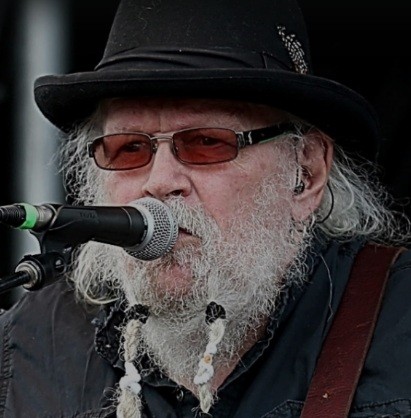
They Did the Time: Three Country Stars Who Lived the Songs Before They Sang Them
By: Brian Zwerner
Country music has always romanticized the outlaw life, but most artists are singing metaphors. These three were not. Jelly Roll, Merle Haggard, and David Allan Coe each spent serious time behind bars before they ever stepped into a recording studio, and every word they have ever sung carries the weight of that history.
Jelly Roll: From Nashville's Worst Criminal to Its Biggest Star
Jelly Roll first went to jail when he was 14 and spent the next almost ten years in and out of facilities, arrested around 40 times for charges relating to drug possession, drug dealing, shoplifting, and aggravated robbery. At sixteen, he was arrested for aggravated robbery involving a gun and faced up to 20 years in prison. He ultimately served a little over a year in jail followed by more than seven years of probation. "I never want to overlook the fact that it was a heinous crime," he told Billboard. "This is a grown man looking back at a 16-year-old kid that made the worst decision he could have made in life."
The turning point came from an unlikely place. At 23, incarcerated again for drug dealing, he learned in his jail cell that his daughter Bailee had been born. "I've never had nothing in life that urged me in the moment to know that I had to do something different," he said. He transferred to the education unit, passed his GED on the first attempt, and met his daughter on her second birthday.
What followed is one of the great redemption stories in music history. In 2022, he donated $250,000 to build a recording studio at the Davidson County Juvenile Detention Center where he once spent time as a teen. In December 2025, Tennessee Governor Bill Lee pardoned Jelly Roll for his criminal convictions, calling his story "remarkable, redemptive, and powerful." He has testified before Congress on fentanyl legislation, spoken inside prisons to reach people still struggling, and become a CMA Award winner and Grammy nominee. He did not just turn his life around. He went back and tried to pull others up with him. We’ve got the full Jelly Roll biography.
Merle Haggard: The Man San Quentin Could Not Hold
Merle Haggard did his first stint in jail at age 11 when his mother turned him over to juvenile authorities as incorrigible. As a teenager, he went into jail at least three more times. Haggard has famously stated he escaped jail 17 times. "They just couldn't hold me anywhere else," he said. "I escaped 17 different times, so they sent me to San Quentin because I was an escape risk."
In the audience at San Quentin on New Year's Day 1958 was a 20-year-old Merle Haggard, serving a 15-year sentence for attempted burglary, when Johnny Cash walked out and played his first-ever prison concert. What Haggard witnessed that day changed the direction of his entire life. "He had the right attitude," Haggard said of Cash. "He chewed gum, looked arrogant, and flipped the bird to the guards. He did everything the prisoners wanted to do. He was a mean mother from the South who was there because he loved us."
Haggard ended up serving only two years of his 15-year sentence and was eventually pardoned by California Governor Ronald Reagan. He walked out of San Quentin and into one of the most celebrated careers in country music history, producing 38 number one hits including "Okie From Muskogee," "Mama Tried," and "Working Man Blues." Years later, he ran into Cash backstage before a show and told him he had been in the audience that night. Cash thought Haggard had been one of the performers. "I had to tell him, no, I was in the audience, Johnny." Rest in peace, Hag. Learn more about Merle with this full bio.
David Allan Coe: The Original Outlaw
If Jelly Roll and Merle Haggard had serious brushes with the law, David Allan Coe practically grew up inside correctional facilities. Born in Akron, Ohio, Coe was sent to the Starr Commonwealth for Boys reform school in Michigan at age nine and spent the following two decades in and out of correctional institutions for offenses including burglary and auto theft. That included a three-year stint at the Ohio State Penitentiary.
After concluding his final prison term in 1967, Coe moved to Nashville, living in a hearse he parked in front of the Ryman Auditorium while performing on the street. That image alone tells you everything about David Allan Coe. His debut album, Penitentiary Blues, released in 1969, was compiled from tracks written while he was in prison. He went on to write some of country music's most enduring songs, including "Take This Job and Shove It" for Johnny Paycheck and "You Never Even Called Me by My Name," and became one of the founding figures of the outlaw country movement alongside Waylon Jennings and Willie Nelson. David Allan Coe passed away on April 29, 2026, at the age of 86. He was the real deal from the very first day, and country music will not see another one like him. Read the full bio on this outlaw icon.
Three men. Three very different paths through the American justice system. And three bodies of work that could only have come from people who truly lived what they sang about.