He Cheated Death Then Became a Legend
By: Brian Zwerner
In the vast history of country music, many stories tell of redemption and reinvention. However, few narratives are as visceral, harrowing, and ultimately triumphant as that of Randall Hank Williams, known to the world as Hank Williams Jr. While he was born into country music royalty, his path to becoming a defining legend of the genre was forged not by his name, but through a terrifying moment in 1975 where he stared death in the face and won.
The Shadow of a Giant
For the first 26 years of his life, Hank Jr. lived in the paradoxical position of being country music's most recognized son and its least defined artist. To the industry, he was a living memorial to his father, the immortal Hank Williams. From a young age, he was dressed like his father, sang his father's songs, and was expected to fill boots that no mortal man could inhabit.
While he found success in this role, he was creatively suffocated. He wanted to blend country with the southern rock and blues that he loved, but Nashville wasn't interested in "Bocephus", the nickname his father gave him, developing his own sound. By 1975, the pressure was mounting, and Hank Jr. needed an escape. He found it in the rugged mountains of Montana.
August 8, 1975: The Fall on Mount Ajax
What was supposed to be a relaxing mountain-climbing trip with a friend turned into a nightmare that would rewrite country music history. While ascending Mount Ajax near the Montana-Idaho border, Hank Jr. stepped on a snow bridge that collapsed beneath him. He plummeted approximately 400 feet down the vertical, rock-strewn face of the mountain, landing headfirst.
The impact was catastrophic. His face was shattered, his skull fractured, and doctors initially feared he would not survive the night. He had technically "cheated death" simply by surviving the impact and the arduous rescue effort, but his ordeal was only beginning.
The Grind: Relearning Everything
The recovery was long, grueling, and often described by Hank Jr. as a period of absolute darkness. He spent years undergoing dozens of complex reconstructive surgeries. The man who had been the polished face of his father's legacy was now physically broken.
He had to relearn the fundamental mechanics of life. He relearned how to speak, how to swallow, and eventually, how to sing. It was during this difficult period of seclusion that the true "Bocephus" was born. No longer willing to be a copy of his father, he used his recovery to find his unique voice.
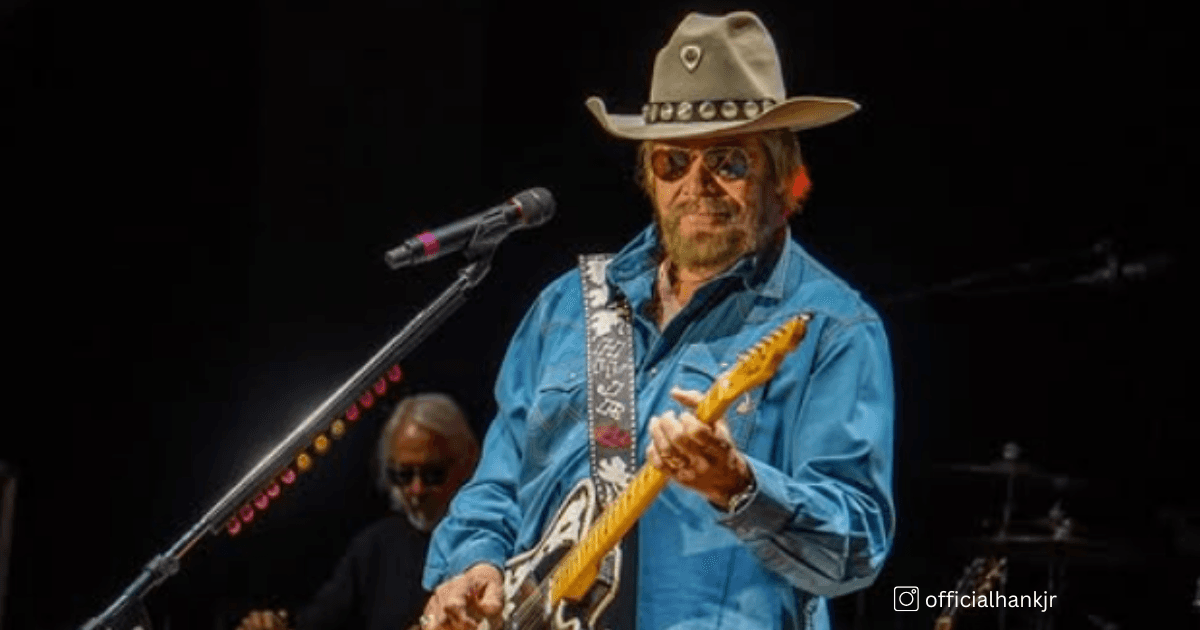
This reinvention was visual as well as musical. When he re-emerged into the public eye, he was no longer a clean-cut "junior." He now sported the signature full beard, sunglasses, and cowboy hat (initially adopted to hide the extensive scars from the accident) which became the iconic look of a country music rebel.
The Resurrection and the Legend
The recovery period unleashed a wellspring of creativity. In late 1975, shortly after his accident, he released Hank Williams Jr. and Friends, an album that signaled his new sound. One that was a gritty, amplified mix of country, rock, and blues.
Nashville was skeptical, but the fans were not. When he returned to touring, the response was electric. The late 1970s and 1980s saw one of the most productive and dominant runs in the history of the genre. He unleashed a string of massive, definitive albums: Family Tradition (1979), Whiskey Bent and Hell Bound (1979), Rowdy (1981), and The Pressure Is On (1981), featuring anthems like "A Country Boy Can Survive."
By the end of the 1980s, the man who was nearly lost in Montana was an undeniable King of Country. He swept the Entertainer of the Year awards from both the CMA and ACM, sold millions of records, and redefined what it meant to be a country music superstar.