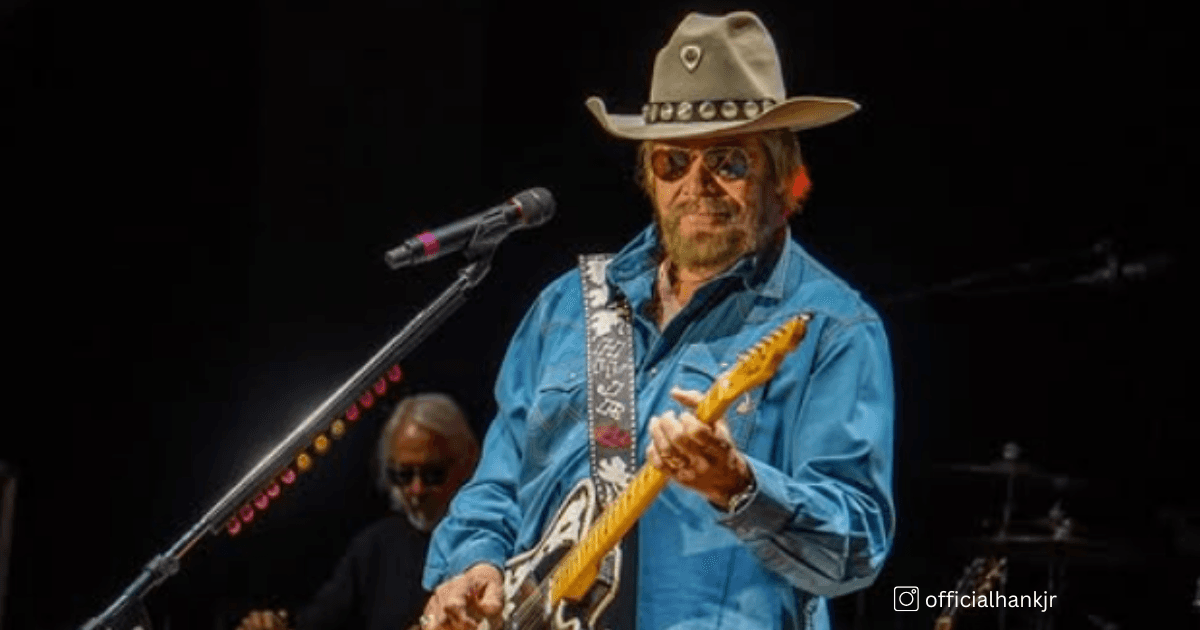
Hank Williams
#
204
Ranking
Hall of Famer
BIRTHDATE
BIRTHPLACE
Oak Hill
,
WV
,
USA
29
6
'
0
"
DIED
Hank Williams was a Mount Olive, Alabama-born country music pioneer who learned guitar from a Black blues musician on the streets of Georgiana, wrote 11 number-one songs in just five years including "Your Cheatin' Heart," "I'm So Lonesome I Could Cry," and "Hey, Good Lookin'," and died of heart failure in the back seat of a car on New Year's Day 1953 at age 29, leaving behind a body of work so foundational to American music that he became the first artist ever inducted into the Country Music Hall of Fame and remains the genre's most towering and essential figure more than 70 years after his death.
Current Tour & Setlist
Hank Williams died on January 1, 1953, in the back seat of a Cadillac near Oak Hill, West Virginia, of heart failure at just 29 years old, en route to a New Year's Day concert in Canton, Ohio, with more than 25,000 mourners attending his funeral in Montgomery four days later. He was the first artist ever inducted into the Country Music Hall of Fame in 1961, was later inducted into the Rock and Roll Hall of Fame, and is universally regarded as the single most influential songwriter in country music history, with artists from Johnny Cash to Bob Dylan to Kris Kristofferson citing him as the foundational figure without whom modern country music as we know it could not exist. His son Hank Williams Jr. and grandson Hank Williams III have both built their own substantial country careers in his name.
Early Life
Born Hiram King Williams on September 17, 1923, near Mount Olive in Butler County, Alabama, he spent his early years moving between small Depression-era Alabama towns after his father Lon Williams, a locomotive engineer, suffered a brain aneurysm that left him hospitalized for eight years and rendered largely absent throughout Hank's childhood, leaving his mother Lillie, a church organist, to raise him and his sister Irene alone by running boarding houses and taking whatever work she could find. When the family settled in Georgiana, a chance encounter with Rufus "Tee-Tot" Payne, a Black street musician who played for tips outside stores and on street corners, proved to be the defining moment of young Hank's musical life: Payne taught him guitar chords and immersed him in the blues, a musical foundation that Hank later said was the single most important influence on everything he ever wrote.
Career Highlights
After his mother moved the family to Montgomery in 1937, Williams formed his first band the Drifting Cowboys and began performing on WSFA radio, earning enough from tips and small venues to help support the family while still a teenager, before alcohol problems led to his dismissal from the station and a string of unreliable band performances through the early 1940s. In 1946, Williams traveled to Nashville and auditioned for Fred Rose of Acuff-Rose Publishing, who recognized his extraordinary songwriting gift and arranged recording sessions for Sterling Records, then secured him a deal with MGM Records where his 1947 debut "Move It on Over" climbed into the country Top Five and launched his professional career. His 1949 recording of "Lovesick Blues" stayed at number one for 16 weeks, crossed over into the pop Top 25, and earned him a Grand Ole Opry invitation where he performed an unprecedented six encores on his debut night, launching the most concentrated burst of hit songwriting in country music history and producing classics including "Your Cheatin' Heart," "Hey, Good Lookin'," "I'm So Lonesome I Could Cry," "Jambalaya," and "Cold, Cold Heart" before his death at 29 ended a career that had produced 11 number-one singles in just five years.
Family & Personal Life
Williams married Audrey Mae Sheppard on December 15, 1944, and the turbulent on-again-off-again marriage that defined much of his adult life produced a son, Hank Williams Jr., born May 26, 1949, before the couple's divorce was finalized in May 1952 amid his worsening alcoholism and erratic behavior. Just three months before his death, Williams married Billie Jean Jones Eshlimar in a pair of public ceremonies in New Orleans on October 19, 1952, selling tickets to fans who wanted to witness the event, and his second wife was pregnant at the time of his death, with Bobbie Jett giving birth to a daughter, Jett Williams, just two days after his funeral, a child he never knew existed who later successfully established her legal claim to be his daughter.