The Final Ride of the Mysterious Rhinestone Cowboy
By: Brian Zwerner
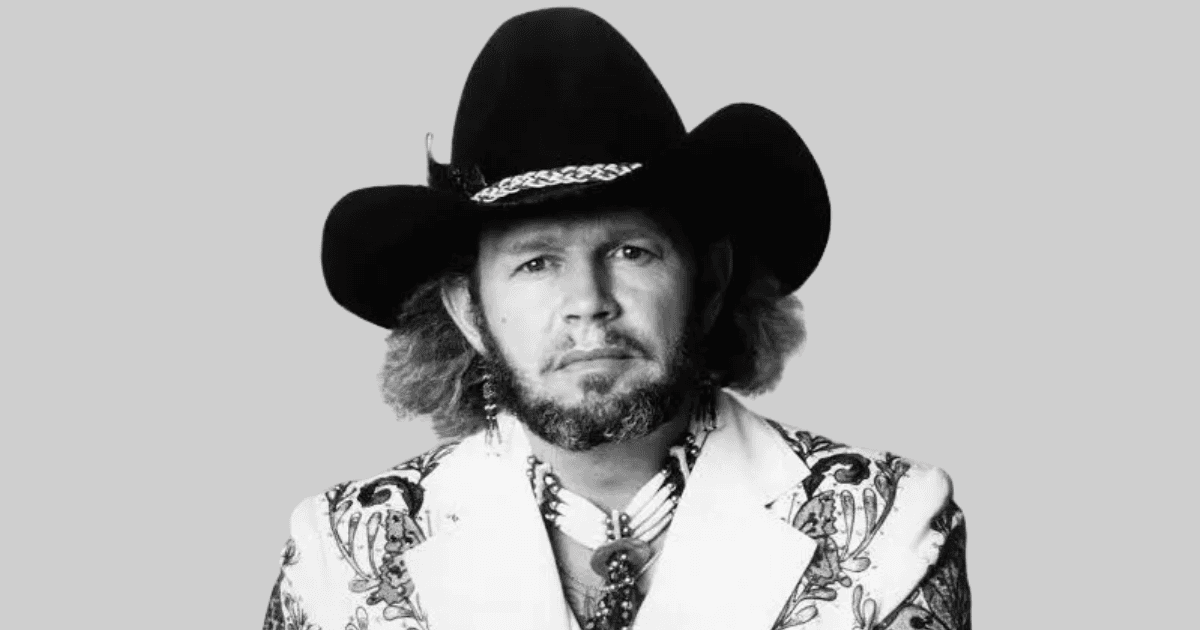
David Allan Coe did not just play outlaw country. He was the outlaw country movement. When news broke that the man known as the "Mysterious Rhinestone Cowboy" passed away yesterday at the age of 86, it marked the end of one of the most unpredictable and authentic chapters in the history of American music. He died peacefully in a Nashville-area hospital on April 29, 2026, leaving behind a legacy as jagged and brilliant as the rhinestones on his iconic suits.
From the Yard to the Ryman
The legend of David Allan Coe began in the hardest way possible. Having spent much of his youth in reform schools and prisons, Coe famously arrived in Nashville in 1967 with nothing but a guitar and a hearse. He spent his early days busking outside the Ryman Auditorium, living out of that hearse and telling anyone who would listen that he was the next big thing.
It was this prison-hardened grit that allowed him to walk into the "Mother Church" and eventually sit alongside Willie Nelson and Waylon Jennings as a pioneer of the Outlaw movement. He brought a sense of danger and rebellion to a city that was, at the time, becoming a bit too polished for its own good.
The Architect of the Anthem
While his "tough guy" image grabbed the headlines, it was his pen that built his empire. Coe was a master songwriter who understood the heart of the working man. In 1977, he gave the world "Take This Job and Shove It," which became a multi-platinum anthem for Johnny Paycheck. He also wrote the hauntingly beautiful "Would You Lay With Me (In a Field of Stone)," which turned a young Tanya Tucker into a superstar.
Perhaps his most enduring contribution to the Nashville songbook was being the first artist to record "Tennessee Whiskey" in 1981. Long before George Jones made it a classic or Chris Stapleton turned it into a global phenomenon, Coe’s raw, bluesy version proved that he had an ear for greatness that surpassed his own outlaw branding.
Creating the "Perfect Country Song"
No conversation about David Allan Coe is complete without mentioning "You Never Even Called Me By My Name." Written by Steve Goodman, the song was originally a satirical take on the genre. However, Coe transformed it into a masterpiece by adding the legendary final verse. He argued that the song couldn't be the "perfect country song" unless it mentioned mama, trains, trucks, prison, and getting drunk.
When he sang those lines, he wasn't just checking off a list. He was singing his life story. The track remains a staple of every honky-tonk in the world, a testament to Coe's ability to balance humor with a deep, soulful respect for the traditions of the genre.
The 2026 Farewell
As the country music community gathers to honor him this week, the mood is one of celebration rather than sorrow. David Allan Coe lived a life that most people only read about in novels. He was a survivor who fought his way from a jail cell to the Grand Ole Opry, proving that a checkered past doesn't have to define your future.
Today, as fans play "The Ride" in his memory, they are reminded that the Mysterious Rhinestone Cowboy didn't just hitchhike through country music. He drove the hearse, he wrote the rules, and he left the genre a lot more honest than he found it.