How Keith Urban Became Country's Top Guitarist
By: Brian Zwerner
In the modern landscape of Nashville, where flashy production often takes center stage, Keith Urban remains a rare breed: a genuine guitar virtuoso who can shred with the intensity of a rock star while maintaining the soul of a country storyteller. While he is now a global superstar with four Grammy Awards and a long-running residency in Las Vegas, the foundation of his "guitar hero" status wasn't built in a studio. It was built in a small convenience store in Australia with a bit of old-fashioned bartering.
The Store Window Trade
The story of the world’s most famous country guitarist began with a simple flyer. Keith’s parents, Bob and Marienne Urban, ran a local convenience store in Caboolture, Queensland. When a local guitar teacher named Sue McCarthy walked into the shop asking to hang an advertisement in the window, Bob Urban saw an opportunity. He agreed to let her post the ad on one condition: she had to teach his young son how to play for free.
By the age of six, Keith was sitting down for those bartered lessons. While other kids were out playing, he was at home obsessing over the American country records his father collected. He didn't just want to sing the songs. He wanted to understand the mechanics of the instruments. His father insisted that if Keith was going to perform, he had to look the part, often helping him design and sew elaborate stage outfits that stood out as much as his playing.
The Australian Prove-It Years
Keith's talent was undeniable from the start. Throughout the 1980s, he became a fixture on the Australian talent show circuit. He made waves on the television show New Faces in 1980 and later became a regular on the Reg Lindsay Country Homestead program.
The turning point came in 1990 when he won the Star Maker competition at the Tamworth Country Music Festival. That win provided the breakthrough he needed to sign his first record deal in Australia, but Keith had his sights set on the "Mother Church" of country music: Nashville. He moved to Tennessee in 1992, but the transition wasn't as smooth as he had hoped.
The Session Player Pivot
After a few years of struggle and a short-lived run with his band, The Ranch, Keith faced a major setback when a medical condition affected his vocal cords. Unable to sing, he didn't put the guitar down. Instead, he leaned into his skills as a musician to pay the bills.
He became one of the most sought-after session players in Nashville, lending his signature "six-string finesse" to massive projects. If you listen to Garth Brooks’ Double Live album or the Dixie Chicks’ Fly, you are hearing the work of a man who was quietly becoming the best guitarist in the city. By the time his voice healed and he launched his solo career in 1999, his reputation as a musician’s musician was already cemented.
The 2026 Legacy
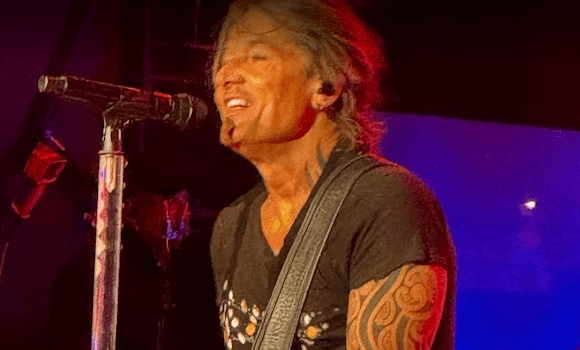
Today, Keith Urban is a bridge between the traditional and the modern. As he headlines his 2026 "HIGH in Vegas" residency and prepares for major stadium dates at Nissan Stadium this summer, his guitar remains the centerpiece of his show. Whether he is playing a banjo-infused country hit or a soaring rock solo, the influence of those early bartered lessons with Sue McCarthy is still audible in every note. He didn't just learn to play the guitar; he learned how to make it speak.